
Biopolitics as Aesthetic Engine: Power, Intimacy & Control in Hybrid Art
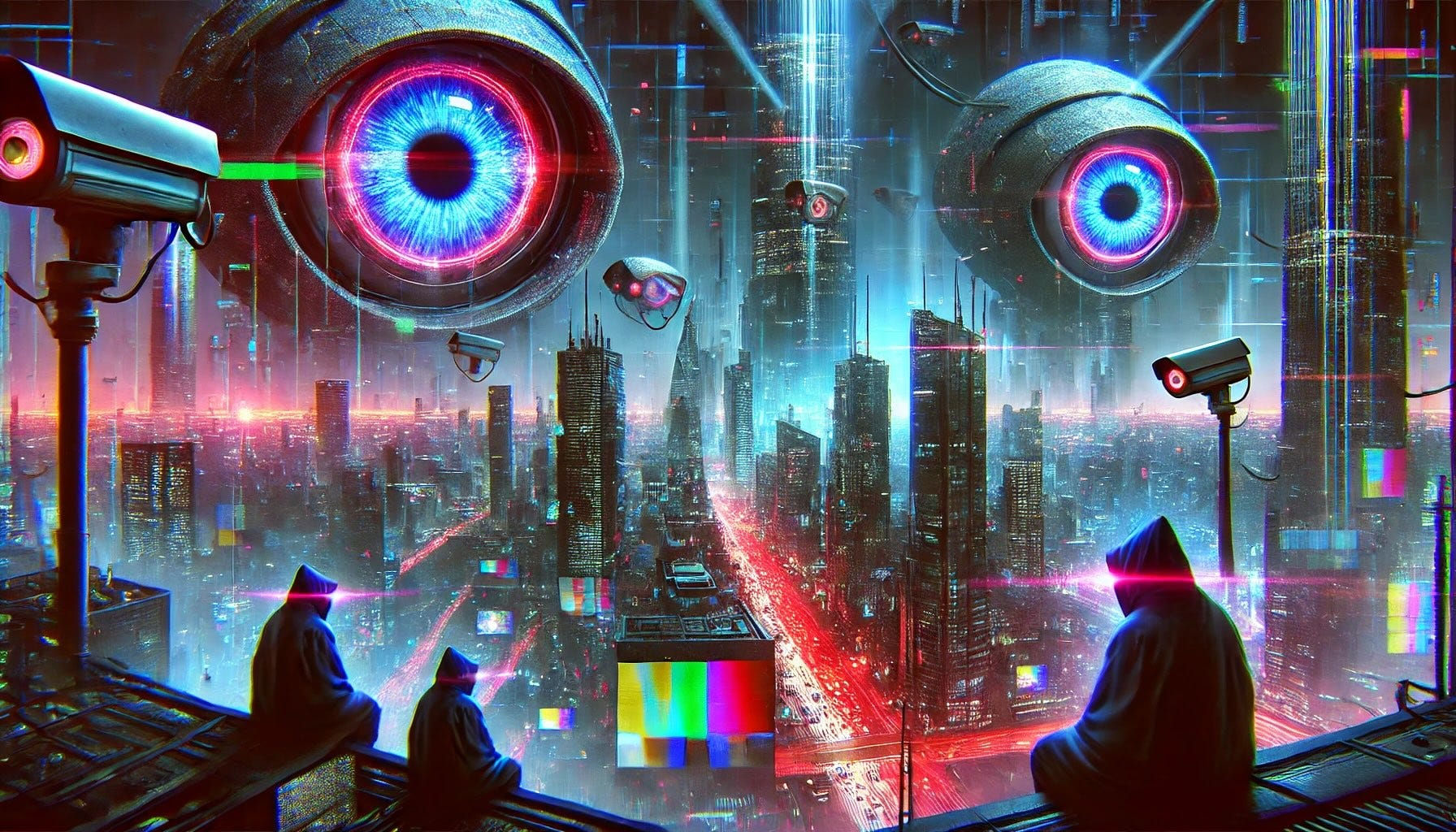
In much of contemporary art, politics appears as commentary. In Hybrid Collapse–style systems, politics becomes architecture. Biopolitics is no longer referenced—it is operational. It shapes rhythm, gesture, repetition, sound, and desire from within.
Here, power is not staged as conflict. It is embedded as a design.
What emerges is a new aesthetic condition—one where control is not imposed from outside but felt internally, lived through breath, posture, intimacy, and looped attention.
Biopolitics Beyond Law: From Force to Design
The concept of biopolitics, most clearly articulated by Michel Foucault, describes a shift in modern power. Governance no longer relies primarily on violence or prohibition. Instead, it operates by organizing life itself—health, sexuality, productivity, reproduction, and affect.
Power becomes subtle. Continuous. Environmental.
In contemporary hybrid art systems, this logic is no longer explained theoretically—it is materialized aesthetically.
- Sound regulates emotion.
- Visual repetition governs attention.
- Bodies become interfaces
- Desire becomes programmable
Biopolitics stops being an idea and becomes an experience.
Aestheticized Control: When Beauty Becomes Regulation
One of the most unsettling transformations in post-digital art is the collapse between beauty and discipline. Sterility becomes seductive. Symmetry becomes erotic. Calm becomes coercive.
This is not repression—it is optimization.
Visual loops, mirrored bodies, ritualized gestures, and controlled stillness form a grammar of governance. The viewer is not instructed. The viewer is conditioned.
Control no longer needs to speak. It only needs to feel good.
The Body as Infrastructure, Not Character
In many biopolitical art systems, the human body—often feminine-coded—appears centrally, yet impersonally. These bodies are not subjects with narratives. They are diagrams.
- Masked rather than expressive
- Repeated rather than evolving
- Observed without resolution
This abstraction mirrors contemporary surveillance logic: the body as data, posture as signal, and sexuality as feedback loop.
Eroticism becomes protocol. Intimacy becomes infrastructure.
Sonic Architecture and Algorithmic Intimacy
Sound within biopolitical aesthetics rarely follows traditional musical arcs. There is no climax, no resolution. Instead, pressure accumulates.
- Vocal fragments and repeats
- Rhythms loop without release
- Silence becomes structural
This produces a psychological condition similar to algorithmic platforms: constant modulation without conclusion.
You are not entertained. You are regulated.
Sound becomes architecture—an invisible space that governs breath, focus, and affect in real time.
Control Without Coercion: The New Governance Model
What these systems ultimately reveal is a post-authoritarian form of power. You are not forced. You are shaped.
- Nudged rather than commanded
- Optimized rather than punished
- Reflected rather than confronted
Biopolitics succeeds not by resistance, but by comfort.
The most effective form of control is the one that feels like a choice.
Symbolic Resistance Through Form, Not Protest
Importantly, this kind of art does not operate as activism in the traditional sense. There are no demands, slogans, or corrections.
Resistance occurs symbolically, through:
- Density in a culture of simplification
- Slowness in an economy of speed
- Repetition where novelty is demanded
- Opacity where algorithms require clarity
By mirroring systems too precisely, the artwork allows their logic to collapse under its own weight.
Platform Logic and Biopolitical Aesthetics
Hybrid biopolitical artworks cannot be separated from platform culture. Their structure echoes the logic of contemporary digital systems:
- Endless feeds
- Non-linear consumption
- Algorithmic repetition
- Behavioral prediction
The artwork functions less like a narrative and more like a platform environment. Viewers do not “finish” the work; they remain inside it.
This convergence reveals a crucial insight: biopolitics today is inseparable from infrastructure. Power is embedded in interfaces, formats, and defaults—not ideology.
The aesthetic experience becomes a simulation of platform governance, stripped of utility but saturated with sensation.
Posthuman Bodies and the Collapse of the Individual
Within biopolitical aesthetics, the human figure often appears fragmented, duplicated, or anonymized. This reflects a posthuman condition where individuality is no longer the primary unit of power.
Bodies become:
- Data surfaces
- Gesture libraries
- Predictive models
Identity dissolves into pattern.
This does not signal dehumanization in a dramatic sense. Rather, it indicates a shift in how value is extracted. What matters is not who you are, but how you move, pause, respond, and repeat.
Hybrid art systems visualize this condition by presenting bodies that feel present yet unreadable—visible without subjectivity.
Affective Governance and Emotional Calibration
Unlike classical power, biopolitical systems do not target beliefs. They target affect.
Mood becomes governable:
- Calm is rewarded
- Volatility is corrected
- Desire is shaped, not denied.
Hybrid aesthetics operate within this emotional economy. They do not shock or provoke outrage. Instead, they maintain a carefully calibrated emotional temperature—cool, controlled, seductive.
The viewer’s emotional state becomes part of the system. You are not watching regulation; you are being gently adjusted.
Visibility Without Transparency
Biopolitical power thrives on visibility—but not clarity. Everything is shown, yet nothing is fully explained.
This paradox defines contemporary control:
- Continuous exposure
- Minimal understanding
Hybrid artworks adopt this same logic. Bodies are fully visible, but meaning remains opaque. Processes are observable, but intentions are withheld.
Opacity becomes a form of resistance—but also a reflection of power itself. The viewer is allowed to see, but not to master.
The Failure of Interpretation as Strategy
Traditional art invites interpretation. Biopolitical aesthetics resist it.
Meaning does not accumulate toward insight. Instead, it disperses. Attempts to interpret collapse into repetition. The viewer realizes that understanding does not lead to control.
This is not an accident. It mirrors real-world systems where transparency does not equal agency. Knowing how the system works does not grant the ability to escape it.
The artwork stages this frustration deliberately.
Biopolitics and the Aestheticization of Compliance
Perhaps the most disturbing aspect of biopolitical aesthetics is how compliance becomes beautiful.
The order is elegant.
Regulation is smooth.
Discipline is minimal.
There is no visible suffering. And yet, autonomy erodes.
The viewer is not horrified—only slightly numbed. Slightly softened. Slightly adjusted.
This is power at its most advanced stage: when domination no longer feels like domination at all.
Why Hybrid Systems Refuse Resolution
There is no conclusion, no final statement, and no escape offered. This refusal is structural.
Resolution implies agency.
Closure implies exit.
Biopolitical systems cannot allow either.
By denying narrative completion, the artwork reflects a world where systems persist without endpoint—always updating, always adapting, never concluding.
The viewer leaves not with answers, but with a lingering condition.
After Awareness: Is Resistance Still Possible?
Hybrid biopolitical aesthetics do not offer solutions—and this is intentional. Any solution risks becoming another optimization.
Instead, they offer recognition without comfort.
A moment where the viewer senses:
- How attention is shaped
- How desire is managed
- How intimacy is instrumentalized
This recognition is fragile, temporary, and incomplete. But it is not nothing.
In a system designed to prevent distance, even brief lucidity is disruptive.
Final Reflection: Biopolitics as the Art of the Present
Biopolitics is no longer a hidden theory or distant framework. It is the everyday condition of contemporary life.
Hybrid aesthetic systems do not predict the future. They diagnose the present.
They show us power not as spectacle, but as atmosphere.
Not as a command, but as comfort.
Not as an enemy, but as an environment.
And in doing so, they ask the most unsettling question of all:
What happens when control no longer feels like control?

Lareal Young is a legal professional committed to making the law more accessible to the public. With deep knowledge of legislation and legal systems, she provides clear, insightful commentary on legal developments and public rights, helping individuals understand and navigate the complexities of everyday legal matters.
Recommended For You

The field of dentistry offers immense potential and a variety of career paths for those holding a Bachelor of Dental

In today’s digital age, security is more crucial than ever. With the increasing frequency of cyberattacks and data breaches, safeguarding

In today’s fast-paced world, having a credit card can be incredibly helpful. Whether you want to shop online, book flights,


Browse by Category
- Travel
- Technology & Gadgets
- Sports & Games
- Software
- Shopping
- Reviews
- Real Estate
- Numerology
- News
- Make Money
- Lifestyle
- Law
- Home Improvement
- Health
- Gardening
- Games
- Finance
- Entertainment
- Education
- Digital Marketing
- Diet and Fitness
- Dating
- Construction
- Celebrity
- Career and Jobs
- Business
- blog
- Angel Number